
The NSF BioDiscovery Scholars Program is an academic year-long research immersion initiative supported by the National Science Foundation (award # 2447179) and led by Dr. Maria Shumskaya and Dr. Supratik Kar (Kean University) that introduces high school students to authentic, hands‑on scientific research. Designed to bridge the gap between classroom learning and real‑world discovery, the program provides motivated students with sustained mentorship, access to modern research environments, and training in responsible scientific conduct.
Participants engage in interdisciplinary experimental work that includes molecular biology, natural product chemistry, analytical chemistry, data science, and computational modeling. Students gain experience with sterile fungal culture, DNA‑based methods such as PCR and DNA sequencing, extraction and analysis of natural metabolites, and metabolomics using the Waters Xevo G2‑XS QTof mass spectrometer. The program also introduces students to computational prediction of molecular activity using QSAR approaches and artificial intelligence, equipping them with practical, career‑ready skills essential for a rapidly evolving scientific workforce.
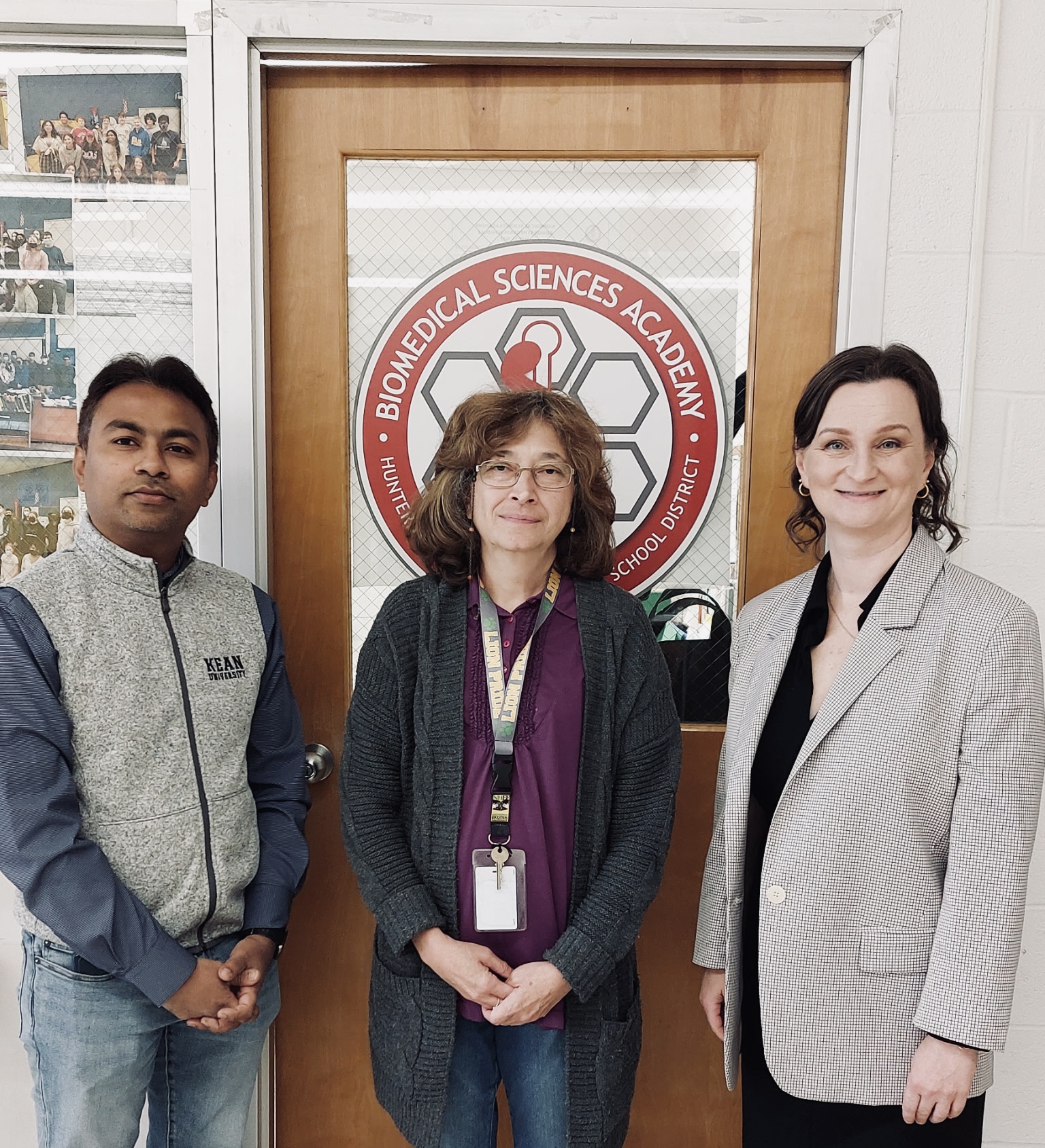
Dr. Shumskaya maintains strong partnerships with local high schools, most notably the Biomedical Sciences Academy (BSA) at North Hunterdon Regional High School, NJ (liaison: Dr. Irina Grigorian), where she is a member of Advisory Board. Students from BSA receive priority consideration for enrollment in this program; however, applications from students attending other high schools are also welcome. A strong interest in biology or biomedical research is expected. Minimal prior programming experience in Python is preferred but not required.
Drs. Shumskaya and Kar will provide intensive mentorship and research resources to six high school seniors over one academic year. All participants receive formal training in research ethics and responsible conduct of research through the CITI Program.
Scholarship support: Each selected student receives a $1,500 research stipend during the spring semester.
Program overview:
Fall Semester: Preparation Phase
During the fall semester (October), Drs. Shumskaya and Kar deliver guest lectures to introduce students to research topics and guide project selection.
- Dr. Shumskaya mentors projects in molecular biology.
- Dr. Kar mentors projects in computational chemistry and molecular modeling.
By the end of November, students develop research proposals and experimental plans and submit them to Dr. Shumskaya along with a CV, personal statement, unofficial transcript, and a recommendation letter from a science teacher. Based on these materials, six students are selected to advance to the spring research phase.
Spring Semester: Research Phase, 15 weeks
During the spring semester, students conduct hands‑on research for 3-4 hours per week. Students travel biweekly to Kean University for full‑day laboratory sessions (3–4 hours), alternating with biweekly remote meetings and structured at‑home assignments, including data analysis and scientific writing.
Attendance at laboratory sessions is mandatory; missed laboratory sessions may result in loss of the scholarship.
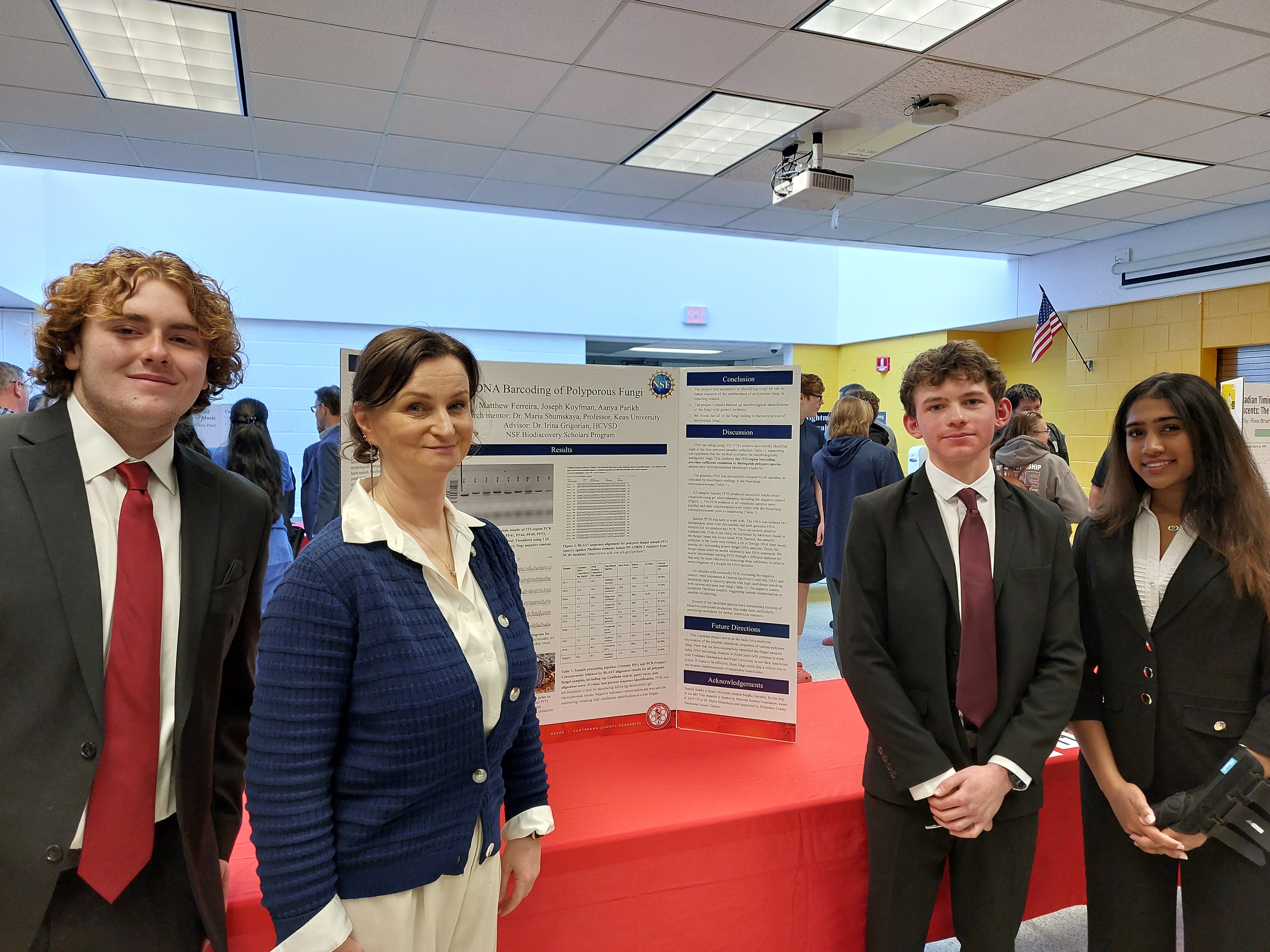
After 10–12 weeks of experimental work, students spend an additional two weeks in intensive preparation for the Capstone Symposium, where the program culminates. Students present their research findings in a poster format, which is formally evaluated using standardized rubrics.
Throughout the program, student progress is assessed through written research reports, poster presentations, and oral presentations, providing comprehensive training in scientific communication and professional research practices.
Participants of the Academic Year 2025-2026 cycle:
Drs. Shumskaya, Kar and Grigorian at BSA, October 2025.
Delivery of guest lectures during the Fall Preparation Phase.
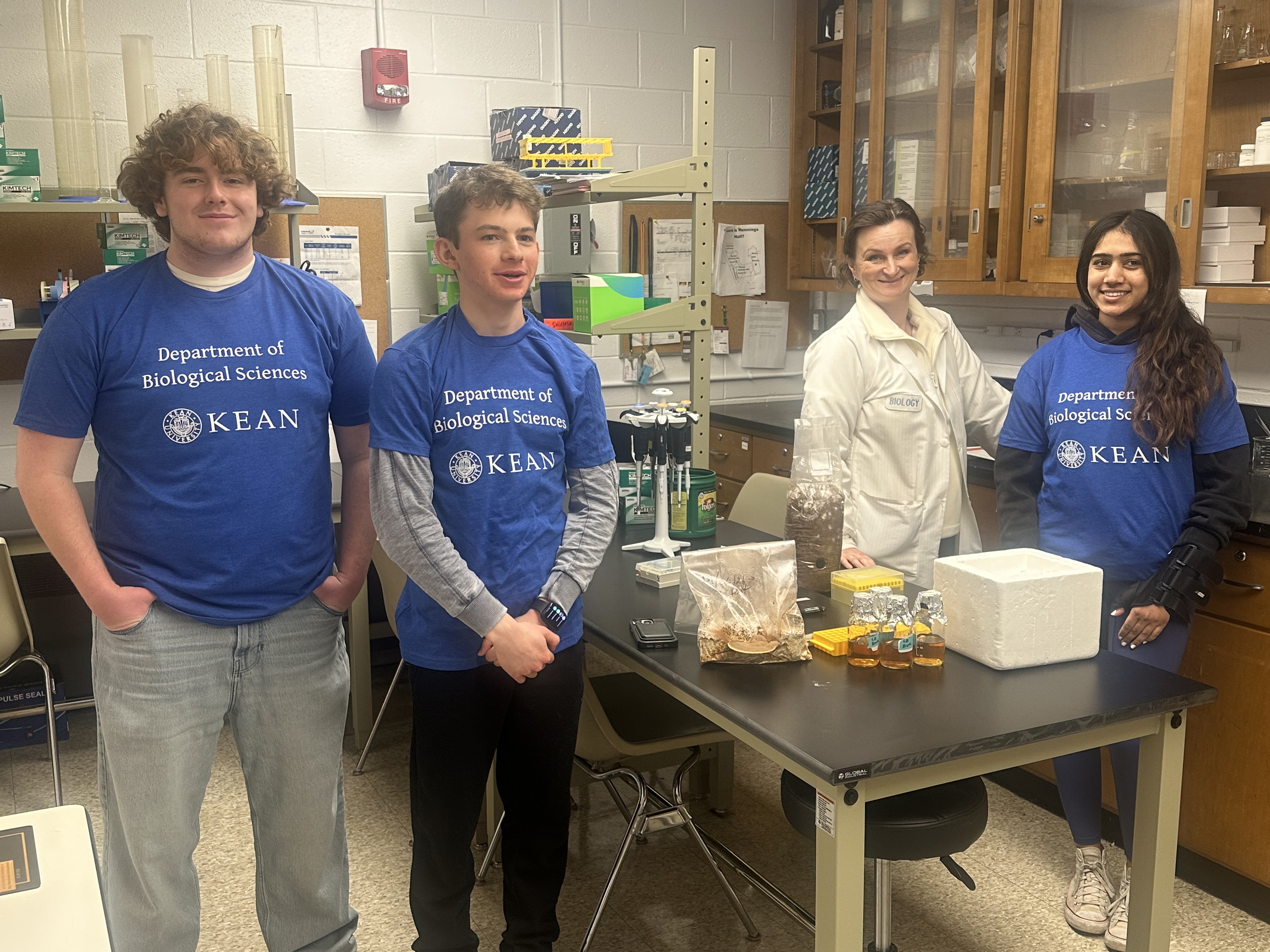
Dr. Maria Shumskaya lab, Spring Research Phase 2026:
Aanya Parikh, Matthew Ferreira, Joseph Koyfman (Biomedical Science Academy, NJ)
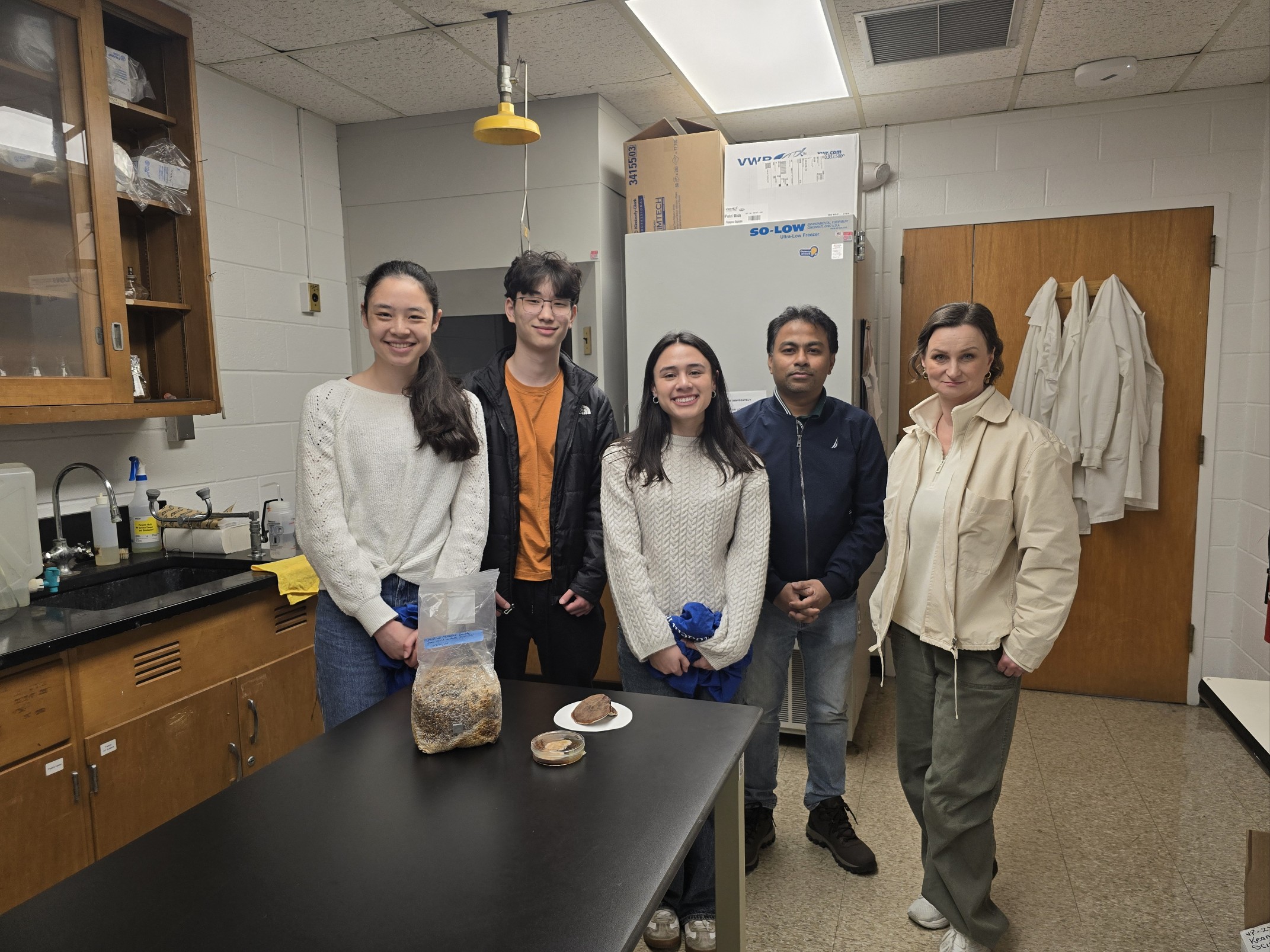
Dr. Supratik Kar lab, Spring Research Phase, 2026:
Malorie Brown (Biomedical Science Academy, NJ), Caitlin Kang (The Academy for Mathematics, Science, and Engineering in Morris Hills, NJ), Maxwell Kim (Livingston High School, NJ)
Biomedical Sciences Academy Symposium, April 30, 2026