
Forest and park ecosystems include multiple communities of living organisms. Dead wood is a significant component of any forest biomass and a valuable habitat and food source for the associated organisms. Richness and stability of natural communities depends on microbial species including fungi. Fungi belong to a separate kingdom of more than 3,000,000 species and their body structure differs from animals and plants significantly. Most of the fungi that live in dead wood look like threads or are nearly invisible and do not have any distinctive morphology. Fungi that can decompose dead wood possess unique enzymes and can accumulate unique metabolites due to their specific biochemical activity. Dead wood mycobiome have been experimentally studied for several decades, however, current molecular biology techniques, including DNA barcoding and DNA metabarcoding, make new microscopic fungal species being discovered every day. At present, the structure and functioning on fungal communities in North American landscapes, and especially in urban areas, is being actively researched.
Wood-decaying fungi are significantly influenced by management practices in the landscapes. Heavy management of urban forests and parks, such as cutting dead wood or hollow wood and seasonal removing of foliage and branches, may affect the mycobiome of a natural forest community. The magnitude of our management impact, as well as the vulnerability of individual species remains largely unknown. It is unclear if the current park management practices, focused on trees and animals to preserve urban biodiversity, actually preserve the microbial communities and the overall health of the ecosystem.

In our lab, we currently 1) study the diversity of species of dead wood inhabitants among managed and unmanaged forests to identify critical communities and microhabitats in need of focused management and conservation; 2) study specific dead wood fungi for their metabolites to identify chemicals with potential in industrial use.
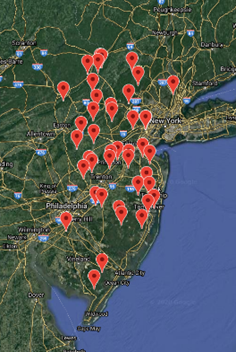
We constantly update the database of all fungal species in New Jersey state, USA, and identify various decomposers in different environments so everybody is able to compare the communities and assess the species richness and the health of the ecosystems across the state. The database is shared online at inaturalist.org and is available at the Global Biodiversity Information Center for the world research community. We also perform statistical analysis of the studied communities, and develop new techniques to assess dead wood fungi diversity in a specific area.
We have also used our data to design an Open Education Resource which can be offered by instructors of computational biology, conservation biology, or ecology in their classes (please create an account and login to access all materials for the class).
ADDITIONAL READING
- Shumskaya, M., Mironov, K. S., Ballesteros, J., Safonov, I., & Halling, R. E. (2023). DNA isolation and genome sequence of the 134-years old holotype specimen of Boletus subvelutipes Ecology and Evolution, 13(8), e10389. Read from Ecology and Evolution journal web-page
- Shumskaya, M., Lorusso, N., Patel, U., Leigh, M., Somervuo, P., & Schigel, D. (2023). MycoPins: a metabarcoding-based method to monitor fungal colonization of fine woody debris. MycoKeys, 96, 77-95. Read from MycoKeys journal web-site
- Shumskaya, M., Filippova, N., Lorentzen, L., Blue, S., Andrew, C., & Lorusso, N. (2023). Citizen science helps in the study of fungal diversity in New Jersey. Scientific Data, 10(1), 1–10. Read from Scientific Data journal web-site
- Suarez Casanova, V. M.; Shumskaya, M. (2021) Exploring DNA in Biochemistry Lab Courses: DNA Barcoding and Phylogenetic Analysis. Biochemistry and Molecular Biology Education, 49(5), 789-799.Read from BMBE journal web-site
- Moose R., Schigel D., Kirby L., Shumskaya M. (2019) Dead wood fungi in North America: an insight into research and conservation potential. Nature Conservation, 32:1-17. Read from Nature Conservation journal web-site
 Maria Shumskaya, Ph.D.